

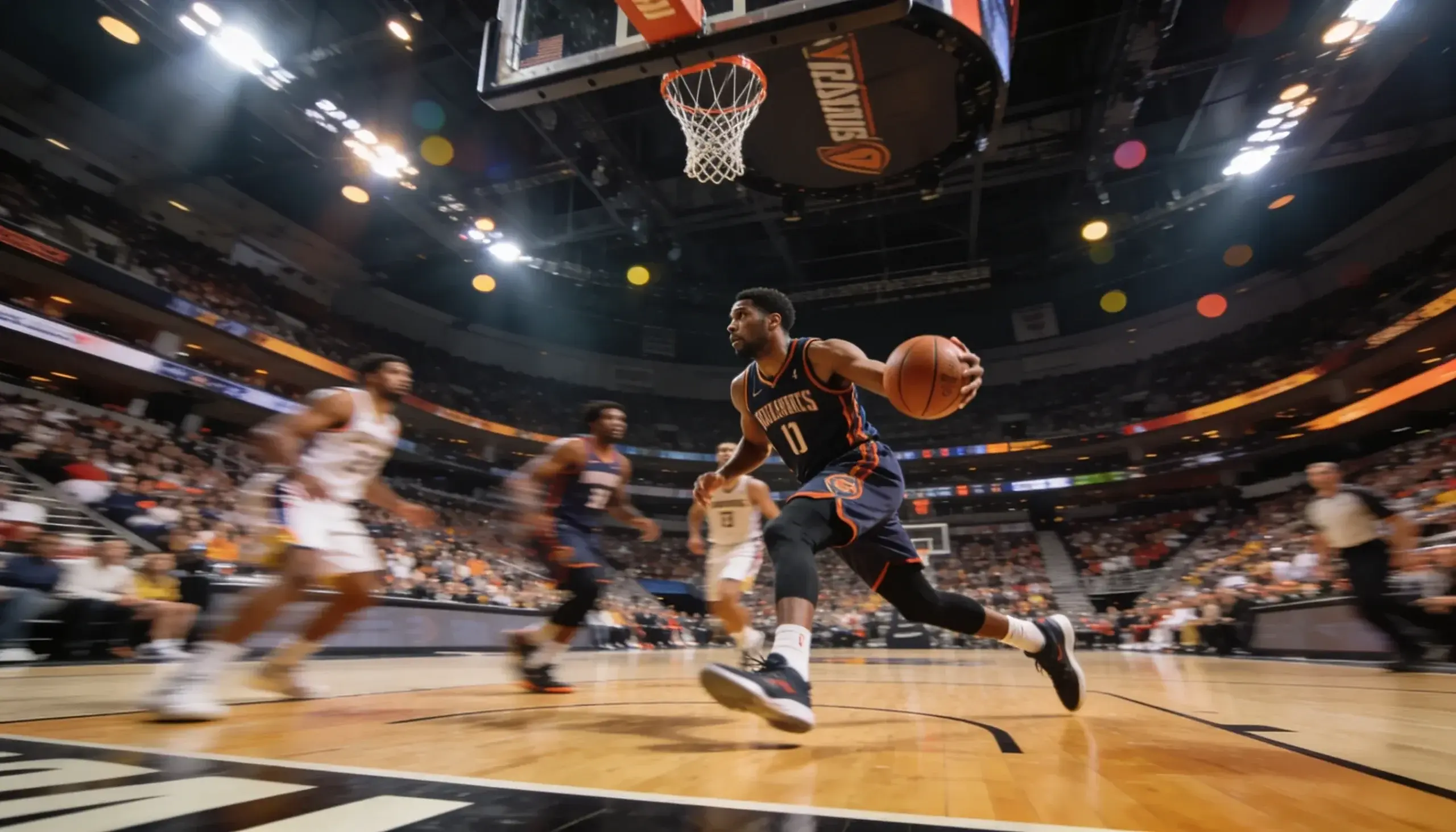
Capitalizing on Inefficiencies in Real-Time Live Basketball Markets
Two seasons ago I made a decision that reshaped my entire NBA betting approach: I shifted 60% of my betting volume from pre-match to live markets. The catalyst was a December game between Dallas and New Orleans where my pre-match model had no edge on the spread, but a 14-2 Pelicans run in the third quarter pushed the live spread to Dallas +8.5 — a number that bore no resemblance to the underlying quality gap between the two teams. I took Dallas live and they covered comfortably. That was not a lucky break. It was a structural inefficiency in how live odds get priced, and once I started looking for it, I found it everywhere.
In-play betting now accounts for 62.35% of the entire online sports betting market and is growing at a compound annual rate of 13.62%. The NBA, with its constant scoring, frequent momentum swings, and timeout-driven pauses, is uniquely suited to live wagering. Yet most bettors still treat live betting as an afterthought — a way to chase losses or add excitement to a game they are already watching. That mismatch between market size and participant sophistication is where value lives.
The fundamental advantage of live NBA betting over pre-match is information asymmetry in reverse. Before tip-off, the bookmaker and the sharp market have had hours to digest injury reports, lineup data, and situational factors. The pre-match line is, by close, a highly efficient estimate. But once the ball is tipped, the bookmaker’s live algorithm is processing real-time scoring events while simultaneously trying to manage action flow, and the speed required creates windows where the odds lag behind what the game data is telling you.
This is not a theoretical argument. I have tracked my live betting results against my pre-match results across four full seasons, and my CLV — closing line value, the best predictor of long-term profit — is consistently 1.5 to 2 percentage points higher on live bets. The reason is simple: in live markets, I am competing against an algorithm that updates every few seconds, while in pre-match markets I am competing against thousands of informed bettors who have had all day to find the same edges I am looking for.
How In-Play NBA Odds Are Generated and Where They Lag
Understanding how live NBA odds are generated is essential to understanding where they break down. Here is what happens behind the scenes: the bookmaker feeds a pre-match model with the opening spread, totals, and moneyline as baselines. Once the game starts, an algorithm adjusts those baselines in response to scoring events, clock time, fouls, and — increasingly — real-time player-tracking data. The NBA’s partnership with FanDuel in 2024 gave sportsbooks access to player-tracking feeds that measure player movement, acceleration, and positioning in real time, enabling granular micro-betting markets that did not exist five years ago.
The algorithm’s weakness is context. It knows the score, the time, and the pace of the current game. What it processes less efficiently is why the score looks the way it does. A team trailing by 12 in the third quarter because their star player picked up early foul trouble and sat for eight minutes is a fundamentally different proposition from a team trailing by 12 because they are being outclassed at every position. The live algorithm treats both situations similarly — adjusting the spread based on the score deficit and time remaining — but the expected trajectory of these two games is radically different.
Timeouts and media breaks create another layer of lag. When a coach calls a timeout after an opponent’s 8-0 run, the live odds adjust to the new score but often underweight the tactical reset that the timeout provides. I have found consistent value in backing the team that calls the timeout during a bad run, particularly in the third quarter when there is enough game left for the adjustment to take effect. The algorithm sees “trailing team” and “recent scoring run against them.” What it misses is the human element: the coach drawing up a play, the defence tightening its rotation, the crowd responding to a stop.
Substitution patterns are a third area of algorithmic weakness. When a team’s bench unit is on the floor and conceding a run, the live spread adjusts downward. But the starters are coming back — usually within two to four minutes — and their return resets the game’s quality level in a way the algorithm anticipates too slowly. I track rotation timing for every team I bet on, and when I see a bench-heavy lineup conceding points in the second or third quarter, I start watching the live spread for an overreaction that I can exploit once the starters return.
Live bettors should pay special attention to late-game dynamics, particularly by utilizing our fourth quarter betting strategy to exploit fatigue.
Fourth-Quarter Dynamics: Pace, Fatigue, and Clutch Patterns
Wang et al. analysed 2,295 NBA games over ten years and found that 19% of them — nearly one in five — are decided in the fourth quarter, where pace drops to 90-100 possessions. That stat alone should reshape how you think about live betting. The fourth quarter is not just the end of the game; it is a structurally different phase with its own pace dynamics, fatigue profiles, and strategic incentives.
Fatigue is the dominant variable. García et al. documented a physical performance decline between the first and fourth quarters with an effect size of -1.27 — a massive drop in athletic terms. Players run slower, jump lower, and react more sluggishly. This fatigue shows up in shooting percentages, defensive rotations, and turnover rates. Teams that rely on athletic advantages — transition scoring, switching defence, fast-break points — see those advantages erode as the fourth quarter progresses. Teams that rely on structured half-court offence, deliberate pace, and veteran decision-making tend to maintain their level.
For live bettors, the implication is direct. When a young, athletic team holds a 6-8 point lead entering the fourth quarter, the live spread often reflects that margin without fully accounting for the fatigue differential. If their opponent is a slower, more experienced team that controls pace and executes in the half-court, the fourth-quarter live spread frequently underestimates the likelihood of a comeback or tightening margin. I have built a specific sub-model for fourth-quarter live betting that factors in minutes played by key players, pace differential in the third quarter versus the team’s season average, and the age profile of the rotation. It is one of the most profitable segments of my entire portfolio.
Clutch-time situations — typically defined as the final five minutes of a game with a margin of 5 points or fewer — introduce additional variance that live algorithms struggle with. Free throw shooting becomes critical, and career free throw percentages are far more predictive in clutch time than recent-game percentages. A team that shoots 72% from the line but has three 85%+ free throw shooters in its closing lineup has a structural advantage in tight fourth-quarter scenarios that the live odds may not fully reflect. These are the margins where preparation — knowing team tendencies, lineup data, and shooting profiles — separates live betting from live gambling.
One pattern I track religiously is intentional-foul sequences in the final two minutes of close games. When a trailing team begins fouling to stop the clock, the game’s scoring pattern shifts entirely to free throws and rushed three-point attempts. The live total adjusts for the increased possessions but often underestimates how inefficient the scoring becomes under this pressure. Trailing teams in foul-mode shoot roughly 30-32% from three (well below their season average), while leading teams convert free throws at varying rates depending on who the trailing team chooses to foul. If the leading team’s weakest free throw shooter is on the floor and the opponent is smart enough to target them, the live total can overestimate the remaining scoring. It is a niche edge, but fourth-quarter live betting rewards niche knowledge.
Micro-Bets Explained: Next Scorer, Two-Minute Windows, and Player Sprints
The first time I saw a “next player to score” market update in real time during an NBA game, I understood immediately why the industry is pouring resources into micro-betting. These are bets on hyper-granular events — who scores next, total points in a two-minute window, whether a specific player records an assist in the next three possessions — and they have exploded in availability since the NBA’s 2024 data partnership made real-time player-tracking data accessible to sportsbooks.
Micro-bets represent the frontier of NBA wagering, and their pricing is noticeably softer than traditional live markets. The reason is volume: bookmakers can generate hundreds of micro-bet markets per game, and each requires its own probability model. The sheer number of markets means that individual micro-bet lines receive less calibration attention than spreads or totals. A “next scorer” market, for instance, must account for who is on the floor, recent usage patterns, the current offensive set, and whether the team is in transition or half-court. Most algorithms approximate rather than precisely model these variables, and approximation creates edges for anyone willing to do the detailed prep work.
My approach to micro-bets is highly selective. I target three specific situations where I believe the market consistently misprices. First, next-scorer markets after a timeout when the team’s play-caller is likely to design a specific action for their primary option. The market distributes probability across all five players on the floor, but coaches overwhelmingly target their best scorer out of timeouts, which means the favourite’s odds are typically too long. Second, two-minute over/under windows in the third quarter when bench units are playing and pace tends to be higher than the live algorithm assumes. Third, player assist markets for primary ball-handlers against teams that switch aggressively — switching creates open shooters, and ball-handlers with high assist rates in switch-heavy matchups tend to exceed their assist lines.
The risk with micro-bets is that the margins are wider than traditional markets and the volume of available bets can encourage undisciplined overtrading. I limit myself to a maximum of four micro-bets per game and I only enter when my estimated edge exceeds 5%, compared to the 2% threshold I use for traditional spread bets. The higher threshold compensates for the wider margins and the smaller sample of data available for model calibration.
Live Totals: Reading Pace Shifts After Half-Time
Half-time is the most important moment in live totals betting. The first half establishes a pace baseline for the game, and if that pace diverges significantly from what the pre-match model predicted, the live total may not fully adjust. I have been exploiting this pattern since 2020, and it remains one of the most consistent edges in my live betting toolkit.
Consider a game with a pre-match total of 224.5. The first half ends 58-52, which is 110 total points — on pace for 220. The live algorithm typically adjusts the game total downward, perhaps to 221.5 or 222. But here is the nuance: if the first-half pace was suppressed by an unusual number of stoppages — fouls, reviews, timeouts — and the underlying shot quality and offensive efficiency were consistent with the pre-match projection, the pace is likely to revert in the second half. The live total at 221.5 underestimates this reversion, and the over becomes a value play.
The reverse applies as well. A first half that produces 120 points (on pace for 240 against a 224.5 total) often triggers a live total of 237 or 238. But if the scoring was driven by unsustainable three-point shooting (say, both teams hitting 45%+ from deep versus their season averages of 36-37%), regression in the second half is likely and the under on the inflated live total carries value. The key variable is not the first-half score itself but the sustainability of the factors that produced it.
I use three inputs for live totals decisions at half-time: first-half pace (possessions per 24 minutes) compared to each team’s season average, first-half three-point percentage compared to season norms, and free throw rate (free throws attempted per field goal attempted) compared to the game’s referee crew’s historical tendencies. Fourth-quarter pace compression is the final overlay — totals in the second half tend to come in slightly lower than the first half due to fatigue, tighter rotations, and more deliberate late-game play, and I apply a 2-3% discount to the projected second-half pace accordingly.
Execution Speed, Screen Setup, and Emotional Control
There is a paradox at the heart of live NBA betting: the best edges are fleeting, but the best decisions require patience. I learned this the hard way during a 2022 playoff game where I identified a live spread value, hesitated for twenty seconds while second-guessing my analysis, and watched the line move past my target. Then I chased the new line out of frustration, got a worse number, and lost a bet I should have either taken promptly or skipped entirely.
Execution in live betting is a physical and technical discipline as much as an analytical one. My screen setup uses two monitors: one displays the game feed with a 2-3 second delay (live broadcasts lag behind arena action, which is itself behind the data feeds bookmakers use), and the other shows my sportsbook accounts alongside a simple spreadsheet that auto-calculates implied probabilities from the live odds. I pre-load the games I intend to watch, log into my accounts before tip-off, and have my bankroll allocation for live bets set in advance. None of this is glamorous. All of it is necessary.
Emotional control during live betting is harder than during pre-match, because you are watching the game unfold and the combination of visual stimulus and financial exposure is intensely engaging. I enforce two rules that have saved me more money than any analytical technique. First, I never place a live bet within 60 seconds of a scoring run that moved the line. The emotional impulse to “jump on” a shifting line is almost always a trap — the move has already happened, and you are buying at the peak of the market’s reaction. Second, I close my sportsbook app during the fourth quarter of any game where I already have an active live bet. Watching the game with money on the line in the final minutes is entertaining but decision-degrading — the temptation to hedge, double down, or cash out is strongest when the stakes feel highest, which is exactly when discipline matters most.
Over the long haul, beating the market consistently in live betting requires the same commitment to process that pre-match betting demands, compressed into smaller time windows. If you approach live betting as entertainment with occasional analysis, you will donate money to the sportsbook. If you approach it as analysis with the entertainment stripped away, you can extract value that the pre-match market has already priced out.
Master every aspect of basketball wagering with our comprehensive UK NBA betting guide.
NBA In-Play Markets at UK Bookmakers: What Is Available
Betting NBA games live from the UK comes with a practical constraint that shapes everything: timing. Regular-season NBA games tip off at midnight or later GMT, and West Coast games often do not start until 3:00 or 3:30 AM. If your live betting strategy relies on watching full games, you need to either adjust your sleep schedule or accept that you will focus primarily on the early-tip-off Eastern Conference games.
Most Gambling Commission-licensed operators offer in-play markets for NBA, but the depth varies considerably. Major-platform live markets typically include live spread, live total, live moneyline, and next-quarter winner. Some operators extend to live player props and micro-bets during marquee games — Lakers, Celtics, Warriors, Knicks — but smaller matchups may only carry basic live markets. I maintain accounts with four UK-licensed operators specifically for live NBA betting, because having multiple options means I can compare live lines in real time and take the best available number. The difference between 1.90 and 1.95 on a live bet is the same difference it is on a pre-match bet: compounding over a season, it is the gap between profit and breakeven.
One UK-specific advantage is that live NBA markets tend to be less heavily bet than in the US, which means lines occasionally stay “stale” for longer after a significant in-game event. A star player sitting down with foul trouble might trigger an instant line move on US books but take 30-60 seconds longer to adjust on a UK platform. That latency creates a brief window for UK bettors who are watching the game and reacting faster than the operator’s feed updates. It is not a guaranteed edge, and it requires genuine game-watching (not just score-tracking), but it exists and I have profited from it consistently over the past three seasons.
